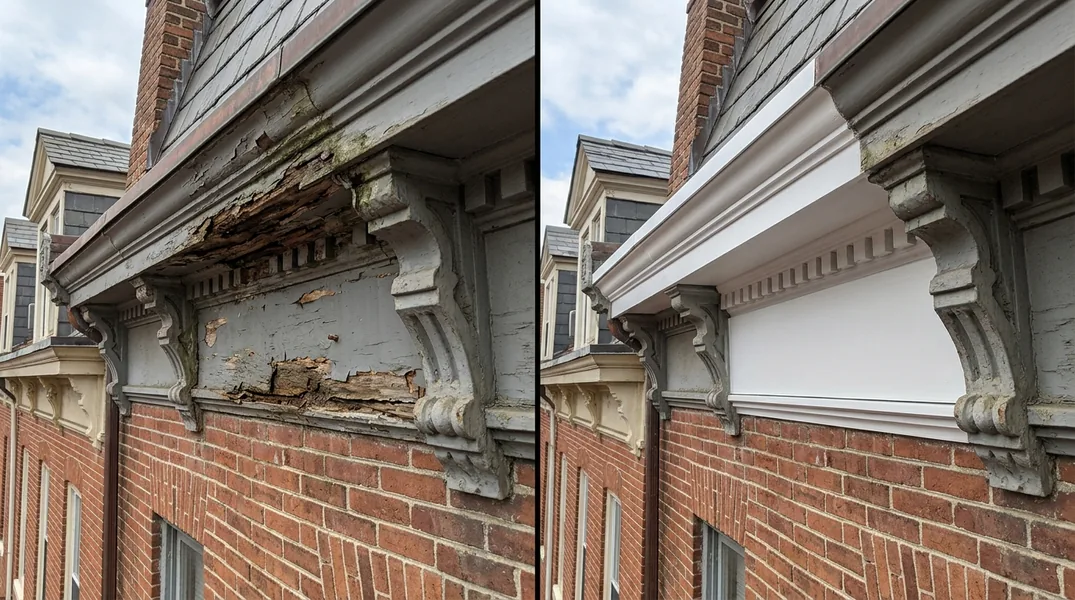
The Perfect Storm: Why Baltimore Rowhouses Are Vulnerable to Wood Rot
Baltimore's iconic rowhouses are architectural treasures, but they're also sitting ducks for wood rot. Built primarily between 1880 and 1950, most of these homes were constructed with solid wood framing, exterior brick, and minimal moisture barriers by modern standards. Age alone doesn't cause rot, but when combined with Baltimore's humid climate and the region's heavy precipitation, the conditions become ideal for fungal growth and structural decay.
The problem intensifies when you consider that many rowhouses have been modified over the decades. The application of formstone (also called artificial stone veneer) in the 1950s and 1960s was meant to modernize these homes, but it often trapped moisture against the original brick and wood framing. Without proper drainage behind the formstone, water penetrates deep into the structure, creating the perfect environment for both dry rot and wet rot. This formstone moisture damage is one of the most common culprits behind wood rot in older Baltimore properties.
Understanding Dry Rot vs. Wet Rot: Which Threatens Your Home?
Homeowners often use the terms interchangeably, but dry rot and wet rot are distinct problems requiring different approaches. Wet rot occurs in wood with high moisture content, typically above 20 percent. It's often visible as soft, discolored wood and tends to remain localized to the area where moisture is present. While serious, wet rot is generally easier to address because removing the moisture source often stops its progression. Dry rot, on the other hand, is far more dangerous and deceptive. It thrives in wood with moisture levels as low as 12 to 16 percent and can spread rapidly through a structure, even to areas that appear dry.
Dry rot is caused by specific fungi that break down the cellulose in wood, leaving it brittle and crumbly. A single colony can spread several meters through a building, traveling through masonry and other materials in search of new wood to consume. This is why Wood Rot & Dry Rot Repair often requires professional assessment. Many homeowners discover dry rot only after significant structural damage has occurred, making early detection critical. If you notice soft spots in floor joists, crumbling wood, or a musty smell in your basement or crawlspace, it's time to call in a professional.
Storm Damage Repair and Its Connection to Wood Rot
Heavy storms are increasingly common in the Mid-Atlantic region, and Baltimore is no exception. When storms damage roofs, gutters, or siding, they create openings for water infiltration. Even small breaches can allow water to penetrate deep into the wood framing, where it may go unnoticed for weeks or months. By the time a homeowner discovers the damage, fungal growth is already underway. This is why prompt storm damage repair is so important. What might seem like a minor repair today can prevent thousands of dollars in wood rot remediation tomorrow.
The connection between storm damage and wood rot is particularly acute in rowhouses, where shared walls mean that water intrusion can affect neighboring properties as well. A missing roof shingle, a cracked chimney crown, or damaged flashing all provide pathways for moisture. If left unaddressed, these seemingly minor issues compound over time. Regular inspection after severe weather and immediate repairs are your best defense. If you've recently experienced storm damage to your Baltimore home, don't wait to have it evaluated by a qualified carpenter.
Common Signs of Wood Rot in Baltimore Homes
Catching wood rot early can save your home and your wallet. The warning signs are often subtle at first but become impossible to ignore as decay progresses. Soft or spongy wood, particularly around windows, doors, and the base of exterior walls, is a classic indicator. You might notice that a screwdriver or awl pushes easily into the wood where it normally would not. Discoloration, paint that bubbles or peels prematurely, and a musty or earthy odor in basements and crawlspaces are also red flags. Some homeowners notice visible fungal growth, which can appear as white, gray, or brown threads or fruiting bodies.
Interior signs include sagging floors, doors that stick or won't close properly, and visible damage to Floor Joist & Subfloor Repair areas. If you can see the subfloor or joists from your basement, inspect them carefully for dark staining, soft spots, or crumbling wood. Don't ignore these signs hoping they'll go away. Wood rot is progressive and won't stop on its own. The longer you wait, the more extensive and expensive the repairs become. If you notice any of these warning signs in your home, contact Baltimore Carpentry at (667) 239-7898 to schedule a free estimate.
How Professional Wood Rot & Dry Rot Repair Works
Professional Wood Rot & Dry Rot Repair involves more than simply replacing damaged boards. A thorough assessment begins with identifying the moisture source. Without addressing the underlying cause, new wood will eventually rot just like the old. This might involve repairing roof leaks, improving drainage around the foundation, removing formstone to restore proper ventilation, or installing vapor barriers in crawlspaces. The diagnostic phase is crucial and separates competent contractors from those who just patch problems temporarily.
Once the moisture source is controlled, the actual repair work begins. Affected wood is carefully removed, and structural integrity is restored using appropriate materials and techniques. For significant damage affecting load-bearing elements, professional repairs might include Beam Replacement & Load-Bearing Wall Removal services to ensure your home remains safe and structurally sound. The goal is to restore your home to its original strength while preventing future decay. This is not a DIY project for most homeowners, as improper repairs can compromise your home's structural integrity and create liability issues.
Wood Rot & Dry Rot Repair Cost in Baltimore: What to Budget
The cost of wood rot repair varies dramatically depending on the extent of damage, the location of the affected wood, and the moisture source. A small area of wet rot in a non-structural element might cost a few hundred dollars to repair, while extensive dry rot affecting floor joists or load-bearing beams could run into the thousands. Many homeowners are shocked to discover that what appeared to be a localized problem has spread further than visible inspection suggests. This is why professional assessment is so important. A qualified carpenter can identify hidden damage and provide an accurate estimate of repair pricing.
Rather than viewing repair costs as an expense, consider them an investment in your home's longevity and safety. Untreated wood rot will continue to spread, eventually compromising structural elements and creating serious safety hazards. The longer you delay, the more expensive repairs become. Baltimore Carpentry offers transparent pricing and detailed estimates so you understand exactly what work is needed and why. We recommend getting a free estimate from a qualified professional before making any decisions about your repair options.
Looking for a professional carpentry contractor in Baltimore? Baltimore Carpentry responds fast for all your carpentry needs.
Get a Free QuoteOur services: Wood Rot & Dry Rot Repair · Termite Damage Repair · Floor Joist & Subfloor Repair