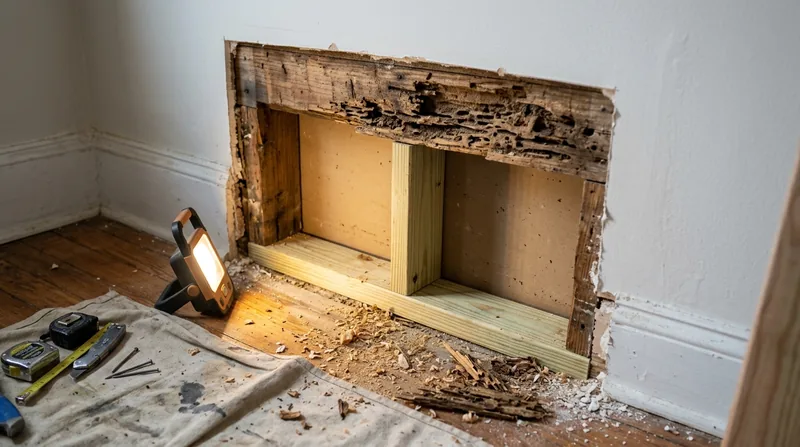




Termite Damage Repair in Baltimore means replacing the wood that termites have already eaten. After your pest inspector identifies the infestation and the exterminator treats it, the structural damage remains: hollowed floor joists, compromised subfloor, damaged sill plates, and weakened framing in the crawlspaces and basement rim joists of Baltimore's dense rowhouses. The humid subtropical climate of the Chesapeake region and the age of most Baltimore homes, especially the brick rowhouses running through Fells Point, Canton, and East Baltimore, create ideal conditions for termite colonies to establish themselves in untreated wood. We remove the damaged framing and replace it with sound wood, working from your pest inspection report. This is not pest control; this is carpentry repair of the structural damage termites leave behind.
Why Termite Damage Repair Matters in Baltimore's Older Housing Stock
Baltimore's rowhouses were built when termite awareness was minimal and wood treatment was rare. Many homes have foundation sill plates and floor joists that were never chemically treated, making them vulnerable to subterranean termite colonies that work silently for years. The damage is often hidden until a floor feels soft underfoot, a basement wall shows mud tubes, or a pest inspector's report arrives. Ignoring termite damage allows the colony to continue feeding and the structural members to weaken further, eventually affecting floor stability and load-bearing capacity.
- We identify which framing members are structurally compromised and must be replaced versus which can be reinforced.
- We remove the damaged wood and sister or replace joists, sill plates, and rim joists to restore load-bearing capacity.
- We work from your pest control report to understand the scope of infestation and the extent of wood damage.
- We coordinate with the Baltimore Building Department when structural alterations require permits.
Addressing termite damage promptly prevents further deterioration and protects the long-term stability of your home's frame.
Key info: Baltimore rowhouses in neighborhoods like Hampden, Woodberry, and Canton are particularly susceptible to termite damage because many were built on hillsides with exposed foundation wood and minimal ventilation. The damp conditions near the Jones Falls and around the Inner Harbor accelerate wood decay once termites have compromised the protective outer shell. For more on wood damage assessment, see our Wood Rot and Dry Rot Repair page.
For guidance on what to expect from a pest inspection, the University of Maryland Extension provides resources on termite identification and damage assessment.
How We Repair Termite Damage in Baltimore Homes
Our process begins with a careful inspection of the damaged wood and an understanding of the extent of the infestation from your pest control report. We do not perform pest treatment or make claims about whether the infestation is eliminated; the exterminator handles that. We focus entirely on replacing or reinforcing the structural wood that termites have damaged. For floor joists and subfloor, we often use sistering (bolting new lumber alongside the damaged member) when partial damage allows repair; when the damage is extensive, we remove and replace the entire joist or section of subfloor. For sill plates and rim joists, replacement is usually the safer and more durable approach.
- We assess the damage by probing suspected areas and measuring the depth and extent of wood loss.
- We obtain any required permits from the Baltimore Building Department if the work involves load-bearing members.
- We remove the damaged wood carefully, protecting surrounding framing and finishes.
- We install new lumber, properly fastened and graded for structural use, using sistering or full replacement as the damage warrants.
- We document the work for your insurance claim if you choose to file one.
The timeline depends on the scope: a single compromised joist in a Towson or Catonsville home may take one to two days; a basement rim joist replacement in a larger Guilford or Roland Park stone home can take three to five days.
Example: A rowhouse in Fells Point with termite damage in the basement rim joist and two floor joists above the crawlspace typically requires the removal of the compromised joist sections, installation of new pressure-treated lumber, and proper fastening to the foundation sill plate and the rim board. The work often reveals secondary damage from moisture and wood rot, which we address as part of the repair. See our Floor Joist and Subfloor Repair service page for more on joist-level work.
Termite Damage Repair Methods and Materials
| Approach | Description | Best for |
|---|---|---|
| Sistering | Bolting new lumber alongside a partially damaged joist or beam to restore load-bearing capacity without full removal. | Damage confined to one edge or face of the member; wood is sound enough to support fastening. |
| Full Joist Replacement | Removing the entire damaged joist and installing new pressure-treated or Douglas fir lumber, properly fastened to rim and header. | Damage spans more than one third of the joist depth or length; joist is structurally unreliable. |
| Sill Plate Replacement | Removing the foundation sill plate where it sits on the masonry and installing new pressure-treated lumber with proper flashing and fastening. | Sill plate is soft, hollowed, or heavily damaged by termites or moisture; affects multiple joists. |
| Rim Joist Repair | Removing and replacing the rim joist (header joist) that runs perpendicular to the floor joists at the foundation perimeter. | Termite damage or wood rot in the rim board; affects the connection of floor joists to the foundation. |
| Subfloor Replacement | Removing damaged subfloor decking and installing new tongue-and-groove or plywood subflooring, fastened to the repaired joists. | Subfloor is soft, spongy, or has visible termite galleries; finish flooring is intact or can be reused. |
Material choice depends on the location and moisture exposure. Sill plates, rim joists, and joists in crawlspaces typically call for pressure-treated lumber rated for ground contact or high-moisture environments. Joists above grade may use Douglas fir or other untreated framing lumber. We always use fasteners and flashing appropriate to the application and the Baltimore building code.
Termite Damage Repair Cost in Baltimore: What to Expect
Termite damage repair in Baltimore typically starts at $1,200 for a single compromised joist or small section of sill plate replacement. The cost rises with the number of joists affected, the extent of damage, the accessibility of the work, and whether structural alterations require a permit. A basement rim joist replacement in a rowhouse runs $2,500 to $4,500 depending on the length of the rim board and the condition of the surrounding framing. Larger jobs involving multiple joists, subfloor replacement, or structural reinforcement can exceed $8,000, especially if secondary damage from moisture or wood rot requires attention.
Several factors move the price within and above these ranges. The number of damaged joists is the primary driver: each additional joist adds material and labor. Access matters significantly; crawlspaces under Hampden or Woodberry rowhouses on steep hillsides may require temporary shoring or careful maneuvering, increasing labor time. The presence of secondary damage from moisture, wood rot, or previous pest activity often surfaces during the repair and extends the scope. Permits for structural work add time and cost but are necessary and common for load-bearing repairs in Baltimore.
We recommend getting two or three estimates before committing to a repair. This allows you to compare scope, method, material quality, and timeline. A detailed estimate should specify which members are being repaired or replaced, whether sistering or full replacement is proposed, and what permits are anticipated. See our pricing overview for more detail on how we structure estimates and what factors affect the final cost.
Termite Damage Repair Near Me: What Baltimore Homeowners Should Know When Hiring a Carpenter
Hiring the right carpenter for termite damage repair means finding someone who understands structural carpentry, can read a pest inspection report, and knows the Baltimore building code and permit requirements. You want a carpenter who will explain the damage clearly, propose repair methods that match the severity, and coordinate with the Baltimore Building Department when necessary. A good contractor will give you a detailed written estimate, carry full insurance, and provide references from recent structural work.
- Verify that the contractor is fully insured and carries general liability and workers compensation coverage.
- Ask for references from recent termite damage or structural carpentry jobs in Baltimore, Towson, or Dundalk.
- Request a written estimate that specifies which joists or members will be repaired, the method (sistering or replacement), and any anticipated permits.
- Confirm that the contractor will work from your pest inspection report and coordinate with your exterminator if needed.
- Understand that structural repairs often require a Baltimore Building Department permit; a good contractor will handle the application and inspection process.
- Ask whether the contractor can document the damage and repair for your insurance claim if you intend to file one.
Once you have selected a contractor, you can reach out to Baltimore Carpentry for a free, no-obligation estimate. We inspect the damage, explain what we find, propose a repair method, and provide a detailed cost and timeline. Call (667) 239-7898 or use the contact form on our website.
Termite Damage Repair in Baltimore: Pricing Guide
| Service | Price | Details |
|---|---|---|
| Single joist repair or sistering | Starting at $1,200 | One partially damaged joist reinforced with new lumber bolted alongside; includes material, labor, and fastening |
| Sill plate or rim joist replacement | Starting at $2,500 | Foundation sill plate or rim joist removal and replacement with pressure-treated lumber; cost varies by joist length and access difficulty |
| Multiple joists or subfloor replacement | Starting at $4,000 | Two or more floor joists replaced, subfloor decking removed and reinstalled, or structural shoring required; scope-dependent |
| Large-scale or complex structural repair | On estimate | Extensive termite damage affecting multiple joists, sill plates, and subfloor; secondary wood rot or moisture damage; structural permits required |
| Travel and site inspection | Included | No mileage fee or travel surcharge within Baltimore and surrounding service areas; free initial estimate within 24 hours |
| Free estimate and consultation | No charge | Call (667) 239-7898 or use our contact form; we inspect the damage, explain findings, and provide a written cost and timeline |
Indicative pricing, the exact cost depends on square footage, finish, and site access. Free personalized estimate within 24h at (667) 239-7898.


