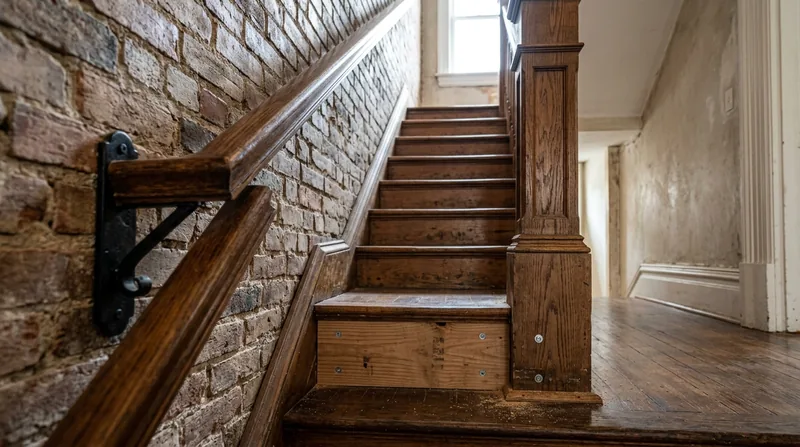




Stair & Railing Repair in Baltimore keeps the heartbeat of the city's rowhouses, brownstones, and Victorian homes working safely. From the elevated white marble stoops of Fells Point and Canton to the wide bay-windowed stairs of Bolton Hill, staircases in Baltimore take a beating from humid summers, nor'easter winters, and a century of foot traffic. Squeaky treads, loose balusters, worn stringers, and wobbly railings are not just noise and annoyance, they are signs that the wood frame is moving, settling, or deteriorating. We repair and rebuild staircases to restore safety and stability, and we restore period railings to code-compliant handrails that meet current building standards. Whether your staircase is original 1920s hardwood or a later addition, we work with the wood you have and explain what can be fixed and what needs replacement.
Why Stair & Railing Repair Matters in Baltimore's Historic Homes
Baltimore's residential stock is defined by wood. Plaster walls, hardwood floors, and century-old wood trim run through the brick and Formstone facades that blanket the city. Staircases are among the most heavily used structural elements in a home, and they fail in predictable ways. Wood moves with seasonal humidity, fasteners loosen, treads cup and warp, stringers develop checks and splits, and balusters work free from their mortises. In Baltimore's humid subtropical climate, with hot muggy summers followed by cold winters and nor'easter snow, wood expands and contracts continuously. The combination of age, moisture, and use creates conditions where a staircase that felt solid five years ago can become unsafe.
- We identify the specific failure mode, whether it is fastener loosening, wood shrinkage, rot entry, or structural deflection of the stringer.
- We repair treads that cup or creak by sistering joinery, tightening fasteners, or shimming stringers back to plumb.
- We rebuild balusters and newel posts that have worked loose, using traditional mortise-and-tenon joinery where the original design warrants it.
- We restore handrails and railings to meet current Baltimore building code requirements for height, load capacity, and baluster spacing.
- We assess whether the stringer itself is sound or has developed rot, and we replace stringers when repair is not honest.
A staircase that moves or squeaks is telling you that the wood frame is working, and addressing it now prevents more costly structural failure later.
Key info: Baltimore's rowhouses and brownstones often have original hardwood stairs with period railings and newel posts. Many of these are worth repairing and restoring rather than replacing, especially in neighborhoods like Federal Hill, Canton, and Roland Park where architectural character carries real value. We work with the original wood and design whenever possible.
For permit requirements and building code details, consult the Baltimore City Department of Planning, which oversees staircase and railing standards for residential properties.
How We Approach Stair & Railing Repair in Baltimore
We start with a walk-through inspection. We test each tread for movement, check balusters for fit and fastening, examine the stringer for rot or splits, and assess the overall plumb and level of the frame. We listen for squeaks and identify where fasteners have loosened. We measure railing height and baluster spacing to determine whether the staircase meets current code. Then we explain what we find in plain language, and we propose repair first, replacement only when the wood has failed.
- We inspect the full staircase, testing treads, checking baluster fit, and examining the stringer frame for rot, splits, or deflection.
- We identify the root cause of movement or noise, whether fastener loosening, wood shrinkage, settling of the house frame, or moisture entry.
- We tighten fasteners, shim stringers, glue and screw loose joinery, and replace individual balusters or treads as needed.
- We restore or rebuild handrails and railings to meet Baltimore building code for height, load, and baluster spacing.
- We finish with sanding and staining or painting to match the existing staircase and protect the wood.
The goal is a staircase that does not move, squeak, or shift under foot, and railings that are both safe and true to the home's period character.
Example: A three-story rowhouse in Hampden had original hardwood stairs with loose balusters and a stringer that had begun to sag at the center span. We sistered the stringer with new framing, re-mortised and glued the balusters back into their seats, and tightened all fasteners. The staircase stopped moving, the squeak disappeared, and the period newel post and handrail remained intact. Total time was three days. If we had replaced the entire staircase, the cost and disruption would have been ten times greater.
Related structural work, such as floor joist and subfloor repair, is sometimes needed if the staircase failure is rooted in a settling floor frame.
Methods and Techniques
| Approach | Description | Best for |
|---|---|---|
| Tread and Fastener Repair | Tighten or replace fasteners, glue loose joinery, shim treads to eliminate movement and squeaks. | Creaky stairs with loose fasteners and minor wood movement, no rot. |
| Baluster and Newel Repair | Re-mortise loose balusters, reglue newel posts, replace individual balusters that are split or loose. | Wobbly railings, loose balusters, period newels worth preserving. |
| Stringer Sistering and Reinforcement | Add sister framing alongside a deflecting or damaged stringer to restore stiffness and eliminate sag. | Sagging stairs, stringers with checks or splits, mid-span deflection. |
| Tread and Stringer Replacement | Replace individual treads or entire stringers when rot, splits, or structural failure make repair uneconomical. | Rot in treads or stringers, structural failure, modern code compliance needed. |
| Handrail and Railing Restoration | Repair, restore, or rebuild handrails and railings to meet current code for height, load, and baluster spacing. | Period railings needing code compliance, damaged handrails, unsafe spacing. |
Stair & Railing Repair Cost in Baltimore: What to Expect
Stair and railing repair in Baltimore typically starts at $600 to $1,200 for straightforward work like tightening fasteners, shimming treads, and regluing loose balusters. A full baluster replacement or stringer sistering project ranges from $1,500 to $3,500, depending on the number of balusters, the length of the stringer, and the complexity of the joinery. Full stringer or tread replacement, or a complete railing rebuild to code, can run $3,500 to $6,000 or more. The factors that move the cost are the size of the staircase, the extent of rot or structural damage, the complexity of the original joinery, the finish required, and whether the work requires a building permit.
A three-story rowhouse staircase with 24 steps and a period newel and handrail will cost more to repair than a two-story colonial with a simple straight run. Access matters too. If the staircase is in the middle of the house and we need to work around occupied rooms and existing finishes, the job takes longer. Species and age matter as well. Original growth-ring hardwood from a 1920s rowhouse is denser and holds fasteners better than modern lumber, so repair is often the honest answer. We always get your approval before we start, and we explain what each repair accomplishes.
For a detailed breakdown of our pricing on all carpentry services, visit our full pricing page. Call us at (667) 239-7898 for a free estimate on your specific staircase.
What to Look for When Hiring a Stair & Railing Repair Contractor Near Me in Baltimore
Finding the right carpenter for your staircase matters. You want someone who knows the local building stock, understands period construction, and can explain the repair in terms that make sense. We are fully insured and we have been in business since 2016, working on the same stairs, rowhouses, and brownstones across Baltimore and the surrounding areas. We do not use subcontractors. The same carpenters who inspect your staircase do the work.
When you interview contractors, ask these questions: Are you fully insured and do you carry liability coverage? Can you explain what is wrong and why repair makes sense instead of replacement? Do you have references from other Baltimore homeowners? Do you understand the local building code for staircase and railing safety? Will you get a permit if the work requires one? Do you provide a written estimate that breaks down labor, materials, and timeline? A good contractor will answer all of these directly.
Get two or three estimates before you decide. The lowest price is not always the best value. A contractor who rushes through the inspection or promises to fix everything without explaining the pathology is a red flag. If your staircase is in a historic district or a neighborhood with an active homeowners association, ask whether the repair work needs approval. Some Baltimore neighborhoods, especially Roland Park and Guilford, have design review boards that approve exterior or visible interior work.
Ready to move forward? Contact us for a free, no-obligation estimate. We respond within 24 hours and we walk you through the repair process step by step.
Stair & Railing Repair in Baltimore: Pricing Guide
| Service | Price | Details |
|---|---|---|
| Tread tightening and fastener repair | Starting at $600 | Tighten fasteners, shim treads, eliminate squeaks. Small staircases or single-flight work included. |
| Baluster and newel repair or replacement | Starting at $900 | Reglue loose balusters, replace individual balusters, repair newel posts. Cost varies by number of balusters. |
| Stringer sistering and structural repair | Starting at $1,500 | Reinforce deflecting stringers, repair rot or splits, restore stiffness. Multi-story staircases or complex framing cost more. |
| Full stringer or tread replacement | Starting at $3,500 | Replace damaged stringers or treads, full railing rebuild to code. Scope and finish details affect final price. |
| Travel and estimate | Included and free | No mileage fee or call-out charge in Baltimore and surrounding areas. Estimate response within 24 hours. |
Indicative pricing, the exact cost depends on square footage, finish, and site access. Free personalized estimate within 24h at (667) 239-7898.


