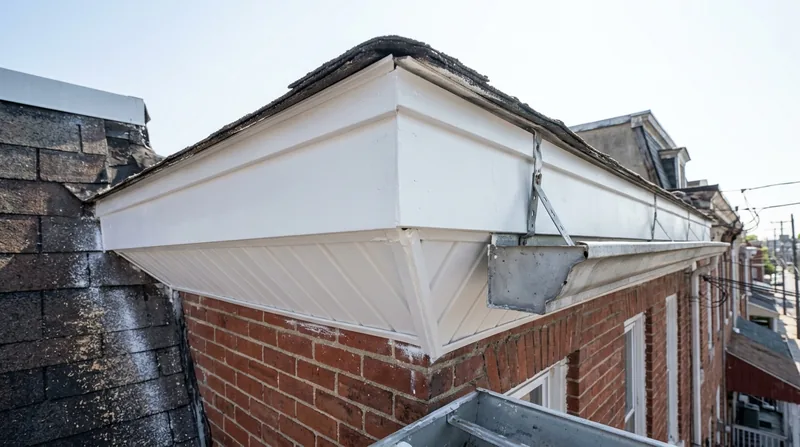




Soft, peeling fascia boards and rotting soffit are the first signs that moisture has found its way into the wood framing at your roofline. In Baltimore, where humid summers bring afternoon thunderstorms and nor'easters dump heavy rain on rowhouse eaves, fascia and soffit rot develops faster than in drier climates. The brick and Formstone facades that define Baltimore's neighborhoods from Fells Point to Canton to Roland Park all sit beneath wood trim that takes the full force of weather. Fascia, soffit and exterior trim repair stops the damage before it spreads into the rafter tails, soffits, and structural framing hidden behind that trim. We replace rotted boards with rot-resistant material, seal gaps that let pests and moisture in, and restore the protective barrier that keeps your home dry.
Why Fascia, Soffit and Exterior Trim Rot Matters in Baltimore
Baltimore's climate is the enemy of wood trim at the roofline. The combination of high humidity, frequent rain, and freeze-thaw cycles in winter creates perfect conditions for rot to take hold. Fascia boards sit directly in the path of roof runoff, and when gutters overflow, clog, or pull away from the fascia, water sits against the wood and begins the slow work of decay. Soffit boards, tucked under the eaves, trap moisture in the shade and rarely dry completely. Once soft rot takes hold, the damage spreads into the rafter tails and structural framing that the fascia protects.
- Soft or spongy fascia boards indicate active rot and need replacement before water enters the structural framing.
- Peeling paint, dark stains, and visible gaps between fascia and gutters are signs moisture is penetrating the wood.
- Rotted soffit allows pests and birds to access the space between the fascia and the rafter tails, creating entry points into the attic.
- Water running behind fascia into the wall cavity can lead to rot in floor joists, rim joists, and sill plates at the wall line.
- Closing gaps and sealing joints prevents moisture from accumulating in the eaves, reducing the risk of dry rot in structural members above.
Addressing fascia and soffit rot early stops the water before it reaches the structural wood that holds your roof up.
Key info: Baltimore rowhouses in Hampden, Canton, and Federal Hill often have original wood fascia installed 80 to 100 years ago. Even painted fascia absorbs water through nail holes, joints, and end grain. A seasonal inspection of your fascia from the ground or a ladder is the fastest way to catch rot before it spreads.
For more on how water damage spreads into structural members, see our guide to wood rot and dry rot repair.
How We Repair Fascia, Soffit and Exterior Trim in Baltimore
We start with a ground-level inspection to identify which boards are soft, which joints are separating, and where water is entering. If the rot is limited to the fascia or soffit itself and the structural framing behind it is sound, we remove and replace the rotted boards. We measure twice, cut once, and install new material that is naturally rot-resistant or treated to resist moisture. We seal all joints, nail holes, and end grain with exterior-grade caulk and prime and paint the new boards to match your existing trim.
- We inspect the fascia, soffit, and gutters from ground level and document areas of rot, separation, and water damage.
- We remove the gutter (if necessary) and carefully take out the rotted fascia or soffit boards without damaging the rafter tails or trim above.
- We examine the rafter tails and structural wood behind the fascia to confirm they are sound; if rot has spread, we address that separately.
- We measure and cut replacement boards from rot-resistant material, matching the profile and width of the original trim.
- We install the new fascia or soffit with stainless steel fasteners, seal all joints and nail holes, and prime and paint to match.
- We reinstall the gutter and confirm that water drains away from the fascia and the wall line.
The entire process typically takes one to two days per side of the house, depending on the extent of rot and the complexity of the trim profile.
Example: A rowhouse in Locust Point with Formstone facade and original wood fascia had soft rot along the front and rear faces. The soffit was intact, but water was running behind the fascia into the brick cavity. We removed the rotted fascia, confirmed the rafter tails were sound, installed new painted fascia with sealed joints, and repositioned the gutter to drain properly. The job took two days and cost well within the standard range for a mid-sized rowhouse.
For related structural carpentry work, see our page on framing and structural carpentry.
Methods and Materials for Fascia and Soffit Repair
| Approach | Description | Best For |
|---|---|---|
| Wood Fascia Replacement | Remove rotted boards and install new painted wood fascia with sealed joints and stainless steel fasteners. | Rowhouses and Victorian homes where matching the original trim profile is important. |
| Composite or Fiber Cement Fascia | Install factory-primed composite or fiber cement boards that resist rot and require minimal maintenance. | Homes where durability and low maintenance are priorities; composite materials last 30+ years. |
| Soffit Closure and Venting | Replace rotted soffit, install proper ventilation or closure boards, and seal gaps to prevent pest entry. | Any home where soffit rot has allowed moisture to accumulate or pests to access the eaves. |
| Gutter Repair and Repositioning | Remove, clean, and reinstall gutters with proper slope and fastening to ensure water drains away from fascia. | Homes where gutter failure contributed to fascia rot or where water is pooling against the trim. |
| Partial Board Replacement | Remove and replace only the rotted section of a fascia board if the remainder is sound. | Homes where rot is isolated to one section and the rest of the fascia is solid and well-painted. |
We match the original profile and material whenever possible, especially on historic homes and rowhouses in Roland Park, Guilford, and Bolton Hill where the original trim is part of the home's character.
Fascia, Soffit and Exterior Trim Repair Cost in Baltimore: What to Expect
Fascia and soffit repair in Baltimore typically starts at $700 for a small section of one side of the house and can range from $1,500 to $4,000 or more depending on the size of the house, the complexity of the trim profile, and whether structural wood behind the fascia needs repair. A typical rowhouse front and rear fascia replacement costs between $2,000 and $3,500. A larger Victorian home with complex trim details, dormers, and multiple rooflines may cost more. The price includes removal of rotted boards, inspection of the structural framing, installation of new fascia or soffit, sealing and painting, and gutter repositioning if needed.
Several factors affect the final cost. The length of the fascia is the primary driver, since we charge per linear foot of board removed and replaced. The profile and material of the original trim matter too, especially if the home is historic and the trim profile is custom or unusual. Access affects labor time, particularly on three-story rowhouses or homes with steep roofs. Whether the structural wood behind the fascia needs repair is another significant factor, since rafter tail rot or rim joist decay requires additional work beyond fascia replacement. Paint and caulk quality also varies, depending on whether you want a basic exterior paint or a higher-grade finish.
We recommend getting estimates from two or three contractors to compare approach, material choice, and timeline. Our estimate is free and includes a detailed walkthrough of the damage, a clear explanation of what needs to happen, and a realistic price range before any work begins. Call us at (667) 239-7898 for a free estimate, or see our full pricing overview for more detail on how we calculate costs across different job sizes.
Fascia, Soffit and Exterior Trim Repair Near Me: What Baltimore Homeowners Should Know When Hiring a Contractor
When you hire a carpenter for fascia or soffit repair, you are hiring someone to work at height on a visible part of your home. Choose a contractor who is fully insured, can show you references from recent jobs in your neighborhood, and is willing to explain the work in plain language before starting. In Baltimore, many older rowhouses have unique trim profiles and original fascia that a good carpenter can match or repair rather than replace entirely. Ask whether the contractor recommends repair or replacement, and listen for honesty about when replacement is the only option versus when selective repair makes sense.
- Verify that the contractor is fully insured and can provide a certificate of insurance for your records.
- Ask for references from jobs completed in the last year in your neighborhood or on a similar home style.
- Request a detailed estimate in writing that breaks down labor, materials, and any additional work discovered during removal.
- Confirm that the contractor will handle gutter work and ensure proper drainage away from the fascia and wall line.
- Discuss paint and caulk options, including whether the contractor will prime all new wood before the final coat.
- Ask about the timeline and whether the contractor can work around your schedule, especially if you need the job done before a particular season.
For a free estimate and to discuss your fascia or soffit repair, contact us at (667) 239-7898. We are in business in Baltimore since 2016 and can reference work we have completed on rowhouses, Victorians, and stone homes throughout the city and surrounding areas.
Fascia, Soffit & Exterior Trim Repair in Baltimore: Pricing Guide
| Service | Price | Details |
|---|---|---|
| Small fascia section repair | Starting at $700 | One side of a rowhouse or small section; includes removal, inspection, new board, sealing, and paint |
| Full front and rear fascia replacement | Starting at $2,000 | Typical Baltimore rowhouse both sides; includes gutter work, sealed joints, and exterior-grade paint finish |
| Soffit repair or replacement | Starting at $800 | One section or full soffit; includes closure or ventilation board, sealed edges, and pest-proofing |
| Complex or large home fascia work | On estimate | Victorian or stone homes with multiple rooflines, dormers, or custom trim profiles require on-site inspection |
| Travel | Included | No mileage fee or travel charge within Baltimore and surrounding service area counties |
| Free estimate | No obligation | Response within 24 hours; call (667) 239-7898 or request online for a detailed walkthrough and pricing |
Indicative pricing, the exact cost depends on square footage, finish, and site access. Free personalized estimate within 24h at (667) 239-7898.


