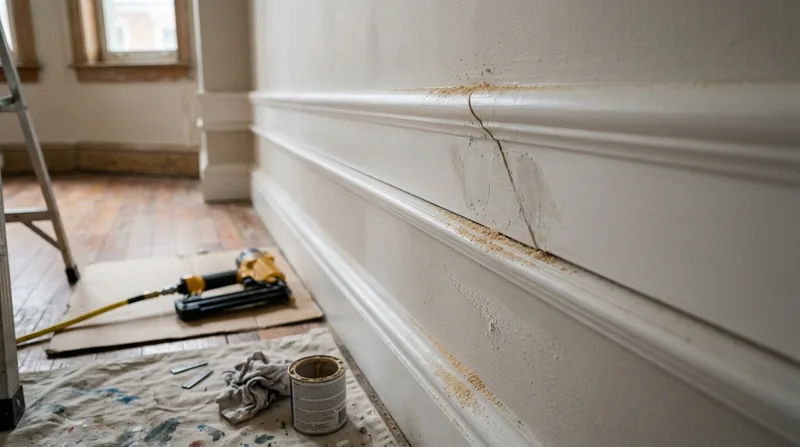




Crown molding and baseboards are the details that define a Baltimore home's interior character. In rowhouses across Fells Point, Canton, and Roland Park, original Victorian and Arts and Crafts trim still sets the standard for craftsmanship. Whether your home retains century-old profiles or you're installing crown molding and baseboard installation in Baltimore as part of a renovation, the work demands precision, tight coped joints, and wood that matches the room's proportions and history. We install crown molding, baseboards, chair rail, and window trim with the same care that built these neighborhoods. Each joint is scribed and coped by hand, not mitered and caulked. The result is trim that sits flush to plaster walls and uneven floors, and that will still look crisp decades from now.
Why Crown Molding and Baseboard Installation Matters in Baltimore Rowhouses
Baltimore's dense rowhouse blocks, from the brick facades of East Baltimore to the stone homes of Guilford, were built with plaster walls, uneven floors, and woodwork that was fitted and finished on site. Modern trim installation often relies on caulk to hide gaps and miters to speed the work. Neither approach respects the geometry of a century-old room or the craftsmanship that originally defined it. Proper trim installation in Baltimore means understanding how plaster walls bow, how hardwood floors slope, and how to make new wood look original or deliberately modern depending on what the space calls for.
- Coped joints fit around inside corners without gaps, even on walls that are not perfectly square.
- Scribing allows baseboard and molding to follow the contour of uneven plaster or brick without leaving shadow gaps.
- Matching original profiles preserves the period character of Victorian, Arts and Crafts, and mid-century homes across Baltimore.
- Modern, clean lines work equally well in renovated lofts and updated traditional homes when installed with the same precision.
- Proper installation protects plaster walls and hardwood floors from damage and looks professional for decades without maintenance.
Trim work done right is invisible; it simply looks like it belongs in the room.
Key info: The Baltimore Building Department does not require a permit for crown molding or baseboard installation in most residential cases. However, if your home is listed in a historic district or is itself a designated historic structure, check with your local historic preservation office before starting work. Many Baltimore neighborhoods, including Canton, Fells Point, and Federal Hill, have historic review requirements.
For guidance on historic preservation requirements in your neighborhood, contact the Baltimore City Department of Planning, Historic Preservation Division.
How We Install Crown Molding and Baseboard in Baltimore Homes
Crown molding and baseboard installation is a sequence of careful measurements, cuts, and fits. We start by understanding the room's layout, existing trim profiles (if any), and the condition of the walls and floors underneath. Plaster walls in Baltimore rowhouses are rarely flat or square. We measure from multiple points, check for level and plumb, and plan cuts accordingly. Every inside corner gets a coped joint, cut by hand on a miter saw so that one piece overlaps the other and the fit is tight even if the wall angle is off by a degree or two. Outside corners are mitered. Baseboards are scribed to follow the floor profile. Crown molding is fitted to the ceiling line. The result is trim that sits flush and looks finished.
- We measure the room and identify the profile or design that matches the home's period or your renovation goals.
- We mill or source trim material in the species and profile you choose, primed or unfinished depending on your finish plan.
- We cut all pieces on site, using coped joints for inside corners and mitered joints for outside corners and transitions.
- We install baseboard and molding with finish nails and construction adhesive, set nails below the surface, and leave the trim ready for paint or stain.
- We clean up and haul away all waste and scrap.
A typical room of 200 square feet takes two to three days from first measurement to final nail set.
Example: A Hampden rowhouse kitchen with original 3.5-inch pine baseboard and simple plaster ceiling required new crown molding to match the dining room next door. We sourced period-appropriate poplar crown, coped every inside corner to fit the uneven plaster, and installed it with tight joints and clean lines. The finished room looked like the crown had been there for a century. Our finish and trim carpentry page covers more examples of period-matched work.
| Approach | Description | Best for |
|---|---|---|
| Coped Joint | One piece cut to the profile of the adjacent piece and overlapped; fit is tight even if walls are not square. | Inside corners in every room; standard in professional finish carpentry. |
| Mitered Joint | Both pieces cut at 45 degrees and joined at a corner; clean appearance when fit is tight. | Outside corners and transitions where a coped joint is not feasible. |
| Scribing | Baseboard cut and fitted to follow the contour of an uneven floor or wall without a gap. | Baseboard in older homes where floors slope or plaster walls are wavy. |
| Profile Matching | New trim milled or sourced to match existing original profiles; ensures period consistency. | Rooms with original Victorian, Arts and Crafts, or mid-century trim; historic homes. |
| Modern Clean Lines | Simple, contemporary profiles installed with the same precision as period work; no caulk or gaps. | Renovated lofts, updated traditional homes, and new construction with a modern aesthetic. |
Crown Molding and Baseboard Installation Cost in Baltimore: What to Expect
Crown molding and baseboard installation in Baltimore starts at around $450 to $700 per room, depending on the room size, the profile you choose, and the condition of the walls and floor. A typical bedroom or small living room might run $600 to $1,200. A larger open-plan space or a full-house project will cost more. The factors that move the price are the linear footage of trim to install, the complexity of the room layout (many inside corners, transitions, or unusual angles), the profile and species of wood, and the condition of the underlying walls and floors. If walls are very uneven or floors are badly sloped, scribing takes longer and costs more. If you are matching an original profile, sourcing the material may add time and cost.
The best way to understand cost for your project is to get two or three estimates from local carpenters. We offer a free, no-obligation estimate within 24 hours. Call (667) 239-7898 or use the contact form. We will measure the room, discuss your design goals, and provide a clear price before we start work. For a full overview of our pricing structure, see our pricing page.
Crown Molding and Baseboard Installation Near Me: What Baltimore Homeowners Should Know When Hiring a Carpenter
Finding the right carpenter for trim work means looking for someone who understands your home's period and the geometry of its rooms. Ask prospective contractors how they handle inside corners, whether they scribe baseboard, and how they match original profiles. A carpenter who talks about caulking every gap and using caulk to hide poor fits is not the right fit. We are fully insured and have been doing this work in Baltimore since 2016. We can provide references from past customers in your neighborhood. Before you hire, ask about any relevant experience in historic homes or specific architectural styles in your area.
- Verify that the contractor is fully insured and can provide a current certificate of insurance before work begins.
- Ask for references from at least two recent projects in Baltimore, preferably in your neighborhood or in a similar home type.
- Get the estimate in writing, with a clear description of the work, materials, timeline, and total price.
- If your home is in a historic district, confirm that the contractor understands local historic preservation guidelines and can work with your local review process if required.
- If your HOA has design guidelines for interior finishes, check those before choosing a profile or finish.
- Ask whether the contractor provides cleanup and disposal of waste, and what warranty or guarantee applies to the finished work.
Good trim work is a partnership between the homeowner's vision and the carpenter's skill. We are ready to help you plan the project and deliver results that will look right for decades. Contact us today for a free estimate.
Crown Molding & Baseboard Installation in Baltimore: Pricing Guide
| Service | Price | Details |
|---|---|---|
| Single room crown molding and baseboard | Starting at $450 | Bedroom or small living room, standard profile, simple layout, includes material and labor |
| Medium room or multiple rooms | Starting at $800 | Larger living area or kitchen, period-matched profile, more inside corners, scribing as needed |
| Full-house or complex renovation | On estimate | Multiple rooms, original profile matching, historic home, extensive wall or floor prep required |
| Material sourcing and milling | Included or quoted separately | Period-matched profiles, specialty species, custom sizing, cost depends on availability and complexity |
| Travel and site visit | Included | No additional charge for estimates or travel within Baltimore and surrounding service areas |
| Free estimate | Free | Response within 24 hours at (667) 239-7898, no obligation, includes site measurement and written quote |
Indicative pricing, the exact cost depends on square footage, finish, and site access. Free personalized estimate within 24h at (667) 239-7898.


