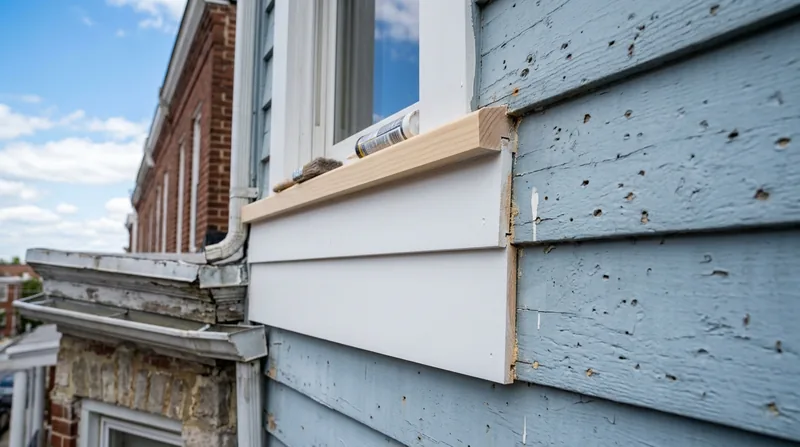




Wood Rot & Dry Rot Repair in Baltimore addresses one of the most persistent threats to the city's aging residential stock. Baltimore's humid summers, nor'easter winter rains, and frequent freeze-thaw cycles create ideal conditions for wood decay in the century-old frame porches, sill plates, floor joists, and exterior trim that define the city's rowhouses, Victorian homes, and craftsman bungalows across Fells Point, Canton, Hampden, Roland Park, and beyond. When moisture enters wood, fungal decay accelerates, weakening structural members and compromising the integrity of walls, floors, and exterior cladding. We remove decayed wood, treat surrounding framing to arrest spread, and rebuild with rot-resistant lumber, delivering a permanent repair rather than a cosmetic patch. Our work is straightforward: diagnose the decay, cut it out, and install sound material that will outlast the repair.
Why Wood Rot Matters in Baltimore's Historic Neighborhoods
Baltimore's dense rowhouse blocks, tree-lined streets, and proximity to the harbor create a climate where wood rot thrives. The elevated white marble stoops and brick facades that give the city its character sit atop wood framing that absorbs moisture from below-grade masonry, rising damp, and roof leaks. Formstone cladding, which covers thousands of rowhouses from the 1940s onward, can trap moisture behind its surface, accelerating decay in the wood frame beneath. Older homes in Bolton Hill, Charles Village, and Roland Park often feature wood-frame porches and bay windows that collect water at their bases. Untreated rot spreads slowly but relentlessly, weakening floor joists, sill plates, rim joists, and studs until structural support is compromised.
- Soft wood that yields to a screwdriver or awl indicates active decay requiring immediate removal and replacement.
- Discoloration, surface checking, and a spongy texture signal fungal activity that spreads to adjacent framing if not arrested.
- Sagging floors, bouncy subflooring, or visible wood loss in porches and exterior trim are common signs in Baltimore homes over 50 years old.
- Moisture sources such as roof leaks, gutter failures, poor drainage, and basement seepage must be identified and corrected to prevent recurrence.
Addressing rot early prevents structural damage, avoids the far greater cost of replacing major framing members, and protects the home's resale value.
Key info: A rotted sill plate or floor joist in a Canton rowhouse or Dundalk ranch can be repaired for $800 to $2,500 if caught early. Left unaddressed for five years, the same decay can spread to multiple joists and require structural sistering or beam installation, pushing costs to $5,000 to $15,000 or more. Early diagnosis saves money and preserves the original wood structure.
For guidance on identifying and documenting rot damage for insurance purposes, see the Baltimore Department of Housing's building code and repair standards, which outline structural integrity requirements for residential properties.
How We Repair Wood Rot: Our Process in Baltimore Homes
Our approach is methodical and transparent. We begin with a site inspection to identify the extent of decay, its source, and the structural members involved. We use a moisture meter and a sharp tool to probe the wood and determine how deep the rot penetrates. Once we understand the scope, we propose repair: cut out all decayed wood back to sound material, treat exposed wood with a wood preservative to prevent future fungal growth, and rebuild the damaged section with pressure-treated lumber or naturally rot-resistant species suited to the application. For structural members like floor joists or sill plates, we may sister new framing alongside the existing member, fastening it securely to restore load capacity. For exterior trim, siding, and porch framing, we replace in kind, matching the profile and species where aesthetics or historical accuracy matter. Throughout, we address the moisture source: rerouting gutters, sealing roof penetrations, improving drainage, or ventilating enclosed spaces to prevent recurrence.
- We inspect the wood with hand tools and moisture readings to determine the full extent of decay and identify any hidden rot in adjacent framing.
- We cut out all soft, discolored, or fungally compromised wood, extending the cut back into sound material on all sides to ensure no decay remains.
- We treat exposed wood surfaces with a wood preservative to inhibit fungal spores and slow decay in surrounding framing.
- We install new framing using pressure-treated lumber, naturally durable species such as redwood or cedar for exterior applications, or Douglas fir for interior structural work.
- We fasten new wood securely to existing framing with galvanized or stainless fasteners to resist corrosion and ensure a permanent bond.
- We identify and correct the moisture source, whether roof leaks, gutter failures, poor grading, or basement seepage, to prevent rot from recurring.
The result is sound wood framing that will serve the home for decades, not a temporary patch that masks a deeper problem.
Local example: A Hampden rowhouse with a rotted porch rim joist and sill plate required removal of 8 linear feet of decayed wood, treatment of the band board and rim joist, installation of pressure-treated lumber, and rerouting of a gutter that had been saturating the masonry below. The repair took three days and cost $1,800. Without intervention, the rot would have spread to the floor joists, requiring full porch reconstruction at five times the cost. We also offer deck and porch repair for more extensive structural work on these vulnerable exterior spaces.
Wood Rot Repair Methods: When to Replace vs. Repair
| Repair Method | Description | Best For |
|---|---|---|
| Localized removal and replacement | Cut out decayed section, treat perimeter, install new pressure-treated or naturally durable lumber fastened to sound wood on either side. | Rot confined to one member, decay less than 30 percent of the member's cross-section, structural role is not primary load-bearing. |
| Sistering or reinforcement | Install a new structural member alongside the existing decayed member, bolted or lag-screwed at regular intervals to share the load and restore capacity. | Rot in a floor joist, rim joist, or sill plate where removal would compromise the structure; used commonly in Baltimore rowhouses with rotted sill plates. |
| Full member replacement | Remove the entire decayed member and install new framing of the same species and dimension, properly supported during installation to maintain structural integrity. | Rot extends through more than 50 percent of the member's length or cross-section, or the member is primary load-bearing and sistering is not feasible. |
| Exterior trim and siding replacement | Remove rotted fascia, soffit, window casing, or siding; treat the underlying framing; install new material matching the original profile and species where visible. | Rot confined to non-structural exterior finishes; protects the underlying frame from weather and maintains the home's appearance. |
The choice between repair and replacement depends on the extent of decay, the member's structural role, and whether the original wood can be preserved with confidence. We assess each situation on its merits and propose the most durable, cost-effective solution.
Wood Rot & Dry Rot Repair Cost in Baltimore: What to Expect
Wood Rot & Dry Rot Repair cost in Baltimore ranges from $650 for a small, localized repair to $5,000 or more for structural sistering or full member replacement. A typical job involving removal of 4 to 8 linear feet of decayed trim, sill plate, or rim joist, treatment of surrounding wood, and installation of new framing runs $1,200 to $2,800. Larger repairs, such as replacing multiple floor joists or sistering a sill plate across an entire rowhouse facade, cost $3,500 to $8,000. The primary factors that affect price are the linear or square footage of decay, the structural role of the affected member, access and demolition difficulty, the need to shore up framing during work, the cost of materials (pressure-treated lumber, naturally durable species, fasteners), and whether the moisture source requires correction (gutter replacement, roof repair, drainage work).
We recommend getting two or three estimates from local carpenters to compare scope, materials, and price. A low estimate that skips treatment of surrounding wood or proposes only cosmetic patching may cost less upfront but risks recurrence and future expense. Our estimate is free, with a response within 24 hours at (667) 239-7898, and includes a detailed breakdown of materials, labor, and any moisture-control work needed to prevent the rot from returning. For a full pricing overview and examples of common repair scenarios, visit our pricing page.
Wood Rot & Dry Rot Repair Near Me: What to Look for When Hiring a Carpenter in Baltimore
Finding a reliable carpenter for wood rot repair requires more than a quick online search. Look for a local contractor who has been in business in Baltimore or the surrounding area for several years and can speak knowledgeably about the specific pathologies of the city's older housing stock: rowhouse sill plates, Victorian porch framing, and the moisture challenges posed by dense urban blocks and aging masonry. Ask whether the contractor is fully insured and can provide a certificate of insurance on request. Verify that the contractor obtains permits where required by the Baltimore Department of Housing for structural work, such as sistering joists or removing load-bearing members. Request references from recent jobs in your neighborhood and follow up with those homeowners to confirm the quality of work and whether the rot has recurred. If your home is in a historic district or subject to homeowners association rules, confirm that the contractor understands any restrictions on exterior materials or modifications. Get written estimates from at least two contractors, and make sure each estimate clearly describes the scope of work, materials to be used, timeline, and any moisture-control measures. The cheapest estimate is rarely the best investment in structural repair; prioritize clarity, experience, and a willingness to explain the work and answer your questions. For a free estimate and to discuss your specific situation, contact us at (667) 239-7898.
We are fully insured, have been in business since 2016, and specialize in the residential carpentry that Baltimore homes require. We do not rush diagnosis or propose replacement when repair is sound. If you have questions about wood rot, dry rot, or related structural concerns such as floor joist and subfloor repair, we are ready to help.
Wood Rot & Dry Rot Repair in Baltimore: Pricing Guide
| Service | Price | Details |
|---|---|---|
| Small localized repair | Starting at $650 | Removal of decayed trim or siding, treatment of surrounding wood, installation of new exterior finish material |
| Medium repair: sill plate or rim joist section | Starting at $1,400 | Removal of 4 to 8 linear feet of decayed framing, preservative treatment, installation of pressure-treated or durable lumber, moisture source correction |
| Structural sistering or full joist replacement | Starting at $3,500 | Installation of reinforcing member alongside decayed joist or complete member replacement, fastening, shoring, and restoration of load capacity in load-bearing framing |
| Multi-member or porch structural repair | On estimate | Extensive decay affecting multiple joists, sill plates, or porch framing requires on-site assessment to determine scope, materials, and support strategy |
| Travel and estimate | Free | Included in Baltimore and surrounding service areas, no separate mileage fee or call-out charge, response within 24 hours at (667) 239-7898 |
Indicative pricing, the exact cost depends on square footage, finish, and site access. Free personalized estimate within 24h at (667) 239-7898.


