Why Is My Floor Sagging? Common Causes in Baltimore Rowhouses
If you own one of Baltimore's classic rowhouses, a sagging floor is more than just an inconvenience. It's a warning sign that something is wrong beneath the surface. The most common culprit is Wood Rot & Dry Rot Repair, which weakens floor joists over decades of exposure to moisture, humidity, and poor ventilation. Many of these historic homes were built in the 1800s and early 1900s, and their wooden structural components have simply deteriorated with age.
Water damage is the primary enemy of floor joists. Leaking roofs, plumbing issues, foundation cracks, and high basement moisture create the perfect environment for rot to spread. In Baltimore's humid climate, wood that stays damp for extended periods will eventually lose its structural integrity. When joists weaken, they can no longer support the weight of the floor and everything above it, causing the characteristic dip or sag. Another common cause is Termite Damage Repair needs, as termites tunnel through wood and leave it hollow and unable to bear loads. Additionally, inadequate support from the foundation or main beams, settling over time, or undersized joists (common in older construction) all contribute to sagging floors.
How to Tell If Your Floor Really Is Sagging
Before you panic, it's important to distinguish between normal settling and a genuine structural problem. Many older rowhouses have slightly uneven floors due to age and foundation movement. However, there are clear signs that your floor is sagging dangerously. Look for visible dips or waves when you stand in the room and look across the floor at a low angle. Place a marble on the floor in different rooms; if it rolls consistently toward one area, that's a red flag. Doors that no longer close properly, cracks forming in walls or ceilings, or gaps appearing between baseboards and walls are all indicators that movement is occurring.
The most telling sign is a noticeable depression in the middle of a room or along a wall. If you can visibly see the floor is lower in one spot compared to another, structural support is compromised. You might also notice creaking or bouncing when you walk across the floor, which suggests the joists are flexing more than they should. If you're experiencing any of these symptoms, it's time to get a professional inspection. Baltimore Carpentry can assess the extent of the problem and determine whether you need Floor Joist & Subfloor Repair or more extensive structural work.
Floor Joist Repair Options: Sistering and Beyond
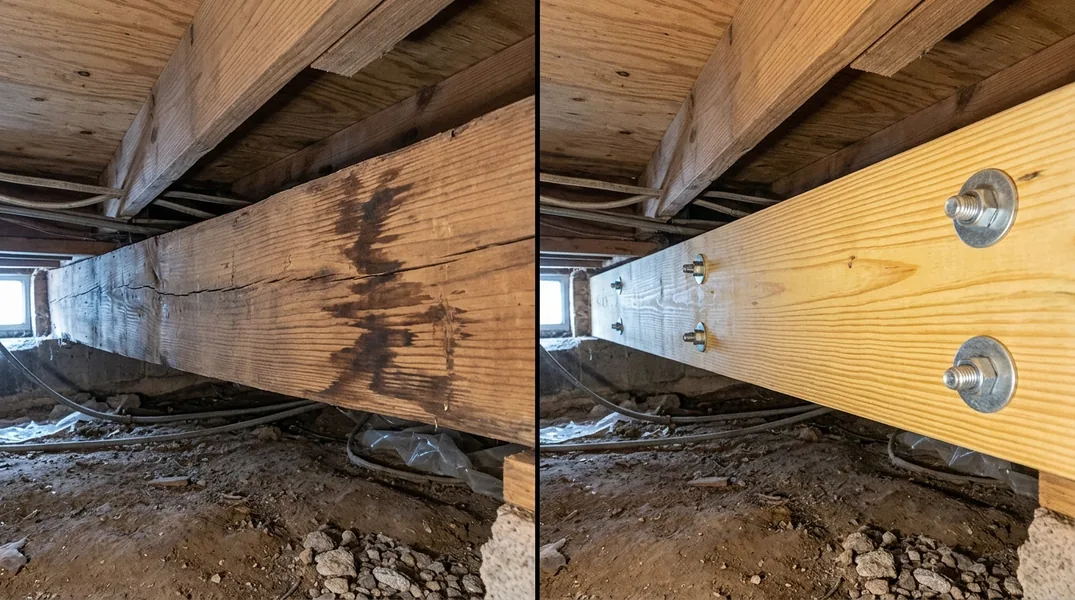
When floor joists are damaged but not completely failed, sistering is often the most effective and cost-efficient solution. Sistering involves bolting a new, pressure-treated timber alongside the existing damaged joist. This doubles the strength of that joist and redistributes the load more evenly. The new sister joist is carefully positioned and secured with bolts spaced every 16 inches or so, creating a composite beam that's stronger than the original. This method works well for joists that have moderate rot or damage and is far less invasive than complete joist replacement.
For more severe damage, complete joist replacement may be necessary. This involves temporarily supporting the floor above with adjustable posts or beams, removing the damaged joist entirely, and installing a new one. In cases where the primary support beam has failed, Beam Replacement & Load-Bearing Wall Removal becomes essential to restore structural integrity. The choice between sistering and replacement depends on the extent of the damage, the age of the joist, and whether water or pest damage is ongoing. A thorough inspection will reveal which approach makes sense for your home. If the underlying moisture problem isn't fixed first, any repair will eventually fail again, so addressing the root cause is critical.
Sagging Floor Repair Cost in Baltimore: What to Budget
The pricing for sagging floor repair varies widely depending on the scope of the problem. A simple sistering project on one or two joists might cost between $1,500 and $3,500, while more extensive repairs involving multiple joists, subfloor replacement, or beam work can easily reach $8,000 to $15,000 or more. The age and condition of your home, the accessibility of the joists, whether the basement is finished, and the cause of the damage all factor into the final cost. If the problem stems from water damage or rot, you may also need to address moisture control, which adds to the overall expense but prevents future problems.
Many homeowners are surprised to learn that sagging floors are not a cosmetic issue you can ignore. Structural problems only worsen over time, and delaying repairs can lead to exponentially higher costs down the road. Insurance typically doesn't cover structural damage from gradual deterioration, so this is an out-of-pocket expense. The good news is that investing in proper repair now protects your home's value and safety. To get an accurate estimate for your specific situation, reach out to Baltimore Carpentry for a free estimate. We'll inspect your home, identify the root cause, and provide a transparent quote for the work needed.
Preventing Future Sagging: Moisture Control and Maintenance
Once your floor has been repaired, the key to preventing future problems is controlling moisture. Many sagging floors in old rowhouses are caused by chronic dampness in the basement or crawl space. Ensure your gutters and downspouts direct water away from the foundation. Seal any cracks in the foundation, install or improve basement drainage, and consider a sump pump if water intrusion is a recurring issue. Proper ventilation is equally important. A damp basement encourages rot and mold, so run a dehumidifier during humid months and ensure adequate airflow through crawl spaces.
Regular inspections are your best defense against future damage. Once or twice a year, take a flashlight and look at the underside of your floor joists. Look for soft, discolored wood, signs of water staining, or visible pest damage. Address plumbing leaks immediately, as even small drips can cause significant rot over time. If you live in a rowhouse, coordinate with your neighbors about roof and wall maintenance, as water can travel from adjacent properties. Finally, avoid storing items in the basement that can trap moisture against the floor framing. If you notice new signs of sagging or damage, contact Baltimore Carpentry right away at (667) 239-7898. Early intervention is far less expensive and disruptive than waiting until the problem becomes severe.
When to Call a Professional for Floor Joist Repair Near Me
Sagging floors are not a DIY project. The structural work involved requires proper engineering, temporary support systems, and specialized tools. Attempting repairs without professional guidance can actually make the problem worse and create safety hazards. A licensed carpenter or structural engineer needs to assess whether sistering is appropriate, whether the cause is still active, and whether additional support is needed elsewhere in the home. They'll also pull any necessary permits, ensuring the work meets current building codes and protects your home's integrity.
Baltimore Carpentry has years of experience diagnosing and repairing sagging floors in historic rowhouses throughout the region. We understand the unique challenges of older homes, the importance of preserving their character while ensuring safety, and the local building code requirements. If you're concerned about your floor, don't wait. Call us at (667) 239-7898 or visit our website to request a free estimate today. We'll give you honest answers about what's wrong and what it will cost to fix it right.
Looking for a professional carpentry contractor in Baltimore? Baltimore Carpentry responds fast for all your carpentry needs.
Get a Free QuoteOur services: Wood Rot & Dry Rot Repair · Termite Damage Repair · Floor Joist & Subfloor Repair