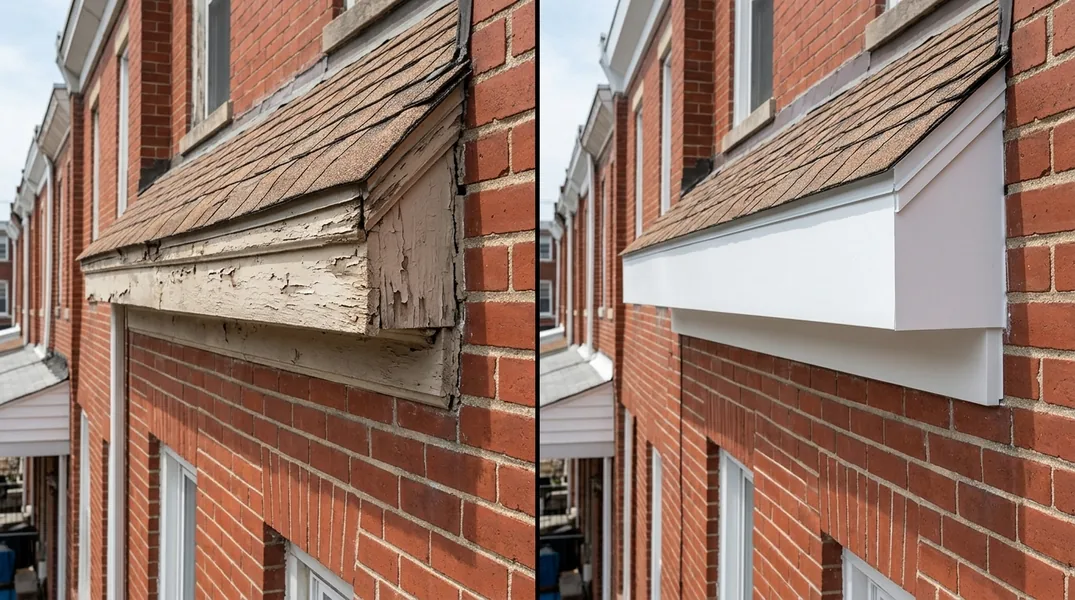
Why Formstone Rowhouses Are Vulnerable to Wood Damage
Formstone, that distinctive faux-stone veneer covering thousands of Baltimore rowhouses, was marketed as the modern solution to brick maintenance in the mid-20th century. Homeowners loved the idea of a maintenance-free facade that would protect their homes from the elements. But here's what most people don't realize: formstone can actually trap moisture against the original brick and wood framing behind it, creating the perfect environment for wood rot to develop.
The rowhouses of Fells Point and Canton were built in the 1800s and early 1900s with wood structural elements, wooden window frames, and wooden door surrounds. When formstone was applied over the original facades decades later, it sealed in moisture that would normally evaporate. Over time, this trapped water penetrates through the formstone coating, reaches the brick, and eventually soaks into the wood components behind the wall. Add Baltimore's humid summers and freeze-thaw cycles in winter, and you have a recipe for serious wood deterioration that many homeowners don't discover until it's advanced.
Signs Your Formstone Rowhouse Has Hidden Wood Rot
The tricky part about wood damage in formstone homes is that you can't always see it from the street. Unlike exposed wood siding, the decay is happening behind the veneer where moisture accumulates. However, there are warning signs you should watch for. Soft spots or sponginess when you press on wooden trim around windows and doors indicate active rot. If your interior plaster is cracking in patterns, or if you notice water stains on interior walls near the exterior, moisture is likely penetrating the wood framing behind the formstone.
Another red flag is a musty smell in basement areas or lower floors, which suggests moisture problems in the foundation or lower wall cavities. Paint peeling from wooden door frames or window sills happens faster than normal when rot is present, because the wood is absorbing and releasing moisture constantly. If you notice any of these signs, don't wait. Wood Rot & Dry Rot Repair becomes more expensive the longer the damage spreads, so early detection saves money and protects your home's structural integrity.
Removing Formstone: Is It Worth the Investment?
Many formstone homeowners eventually face a choice: keep the veneer and manage moisture issues, or remove it and restore the original brick. Formstone removal has become increasingly popular in Baltimore neighborhoods like Fells Point and Canton, where historic character is valued and original masonry is considered an asset. Removing formstone allows you to inspect the brick and wood elements underneath, address any existing rot immediately, and prevent future moisture problems by restoring proper drainage and ventilation.
The downside is cost and disruption. Removal requires careful work to avoid damaging the original brick beneath, and once it's off, you may discover structural issues that need attention. However, many homeowners find that the long-term benefits outweigh the initial expense. You gain the authentic historic appearance of your rowhouse, improve the property's market value, and eliminate the moisture trap that formstone creates. If you're considering this route, a professional inspection is essential to understand what lies beneath before committing to removal.
Wood Siding and Trim Repair for Historic Rowhouses
Baltimore's historic rowhouses often feature decorative wooden cornices, window surrounds, and trim details that are integral to their architectural character. These elements are exposed to constant weather and are among the first places wood rot develops. Wood Rot & Dry Rot Repair on these features requires not just removal of damaged wood, but careful restoration that matches the original profile and materials.
When wood siding or trim is damaged, it's tempting to simply remove the affected section and patch it with modern materials. But in a historic home, this approach diminishes authenticity and can actually cause problems. Original wood was typically softer and more porous than modern pressure-treated lumber, which means new wood absorbs and releases moisture differently. The best approach is to repair with wood that matches the original species and finish, or to replace the entire element if damage is extensive. This preserves the home's historic integrity while ensuring the repair lasts decades rather than years.
Moisture Control: The Real Solution to Long-Term Wood Protection
You can't prevent wood rot without controlling moisture, and that's the foundation of any smart maintenance strategy for a formstone or historic rowhouse. Start by ensuring your gutters and downspouts are clean and functioning properly, directing water at least 4 to 6 feet away from the foundation. Check caulking around windows and doors annually, and recaulk any gaps where water can penetrate. Interior moisture is equally important: use exhaust fans in bathrooms and kitchens, ensure your basement or crawl space has proper drainage, and consider a dehumidifier if humidity levels stay above 60 percent during humid months.
Ventilation is another critical factor. Historic homes often have limited air circulation, especially after weatherization improvements seal gaps that once allowed air movement. While energy efficiency is important, you need to balance it with moisture control. If you've sealed your home tightly, you may need mechanical ventilation to prevent condensation buildup. Regular inspections, especially in spring and fall, help you catch moisture problems before they become structural issues. If you notice signs of moisture or wood damage, contact Baltimore Carpentry for a free estimate so you can understand the scope of any repairs needed.
When to Call a Professional: Wood Rot & Dry Rot Repair Near Me
Some wood maintenance tasks, like painting and caulking, are manageable for homeowners. But wood rot repair is not a DIY project, especially in a historic home where structural integrity and authenticity matter. Dry rot, which develops in wood with moisture content between 20 and 30 percent, spreads quickly and can compromise the strength of beams, joists, and load-bearing elements. If rot has reached structural components, you need a professional who understands both carpentry and historic preservation standards.
Baltimore Carpentry specializes in wood rot and dry rot repair for historic rowhouses throughout the region. Our team can assess the extent of damage, determine whether repair or replacement is appropriate, and execute the work using methods and materials that respect your home's historic character. We've worked on hundreds of formstone and historic homes in Fells Point, Canton, and across Baltimore, and we understand the unique challenges these properties present. If you suspect wood damage or want a professional assessment of your home's condition, call us at (667) 239-7898 to discuss your situation and get a free estimate.
Looking for a professional carpentry contractor in Baltimore? Baltimore Carpentry responds fast for all your carpentry needs.
Get a Free QuoteOur services: Wood Rot & Dry Rot Repair · Termite Damage Repair · Floor Joist & Subfloor Repair