Understanding the Enemy: Dry Rot vs Termite Damage
If you own a rowhouse or older home in Baltimore, you've probably worried about wood damage at some point. The two most common culprits are dry rot and termites, but they're fundamentally different problems that require different solutions. Understanding the distinction between them is your first step toward protecting your investment.
Dry rot is a fungal decay that thrives in damp, poorly ventilated environments. It doesn't require an insect to cause damage; instead, moisture and lack of airflow create the perfect conditions for wood-destroying fungi to spread. Termite damage, on the other hand, is caused by active insects that consume wood as food. While both can compromise your home's structural integrity, the treatment approaches are completely different. Misidentifying the problem could lead you down the wrong repair path, wasting time and money while the real issue continues to worsen.
What Does Wood Rot Look Like? Visual Signs of Dry Rot
Dry rot has a distinctive appearance that sets it apart from termite damage. When you inspect wood affected by dry rot, you'll typically see deep cracks running both across and along the grain, creating a distinctive cubical or brick-like pattern. The wood itself becomes darkened, often turning gray or brown, and it feels soft and crumbly when you press on it. In advanced stages, the wood can be reduced to powder-like dust that crumbles easily in your hand. You may also notice a musty, earthy smell around affected areas, which is the telltale sign of active fungal growth.
Another key visual indicator of dry rot is the presence of fungal fruiting bodies, which appear as white, gray, or orange growths on the wood surface or nearby areas. These fruiting bodies look somewhat like pancakes or shelves and are the fungus's way of spreading spores. If you spot these growths in your basement, crawlspace, or around window frames, dry rot is likely at work. The damage tends to be localized to areas with poor ventilation and persistent moisture, such as beneath leaky gutters, around foundation cracks, or in bathrooms with inadequate ventilation.
Identifying Termite Damage: What to Look For in Your Home
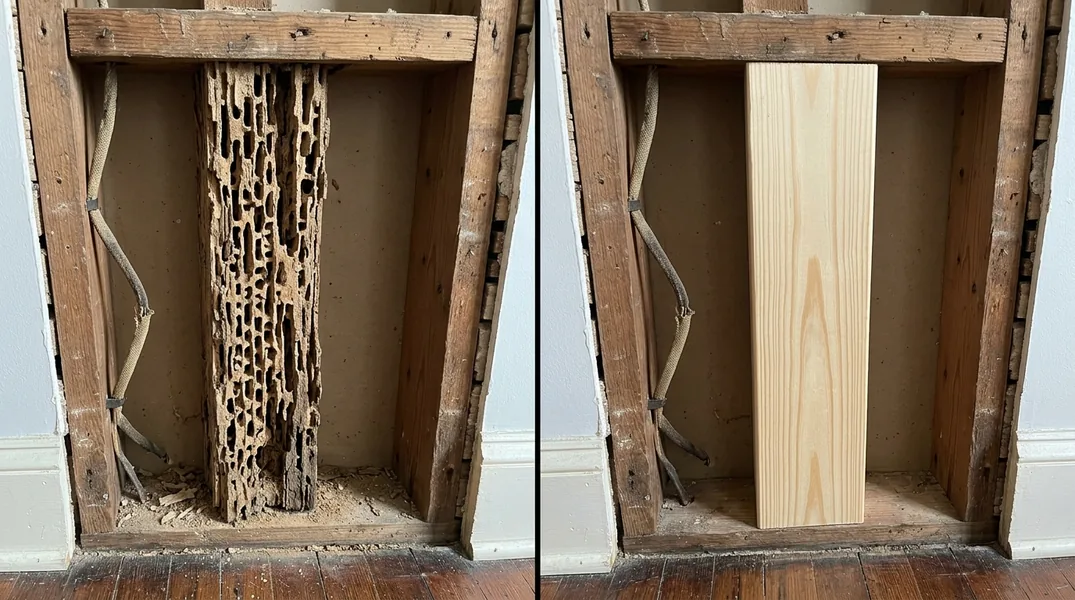
Termite damage presents a markedly different picture than dry rot. When termites consume wood, they typically leave galleries or tunnels running along the grain, creating a honeycomb-like pattern inside the wood. Unlike dry rot, which causes visible surface cracking and crumbling, termite damage often appears intact on the surface while the interior is hollowed out. You might tap on a wooden beam and hear a hollow sound, even though the exterior looks relatively normal. This 'hidden damage' aspect makes termites particularly insidious; significant structural compromise can occur before you notice any obvious signs.
Termites also leave behind distinctive evidence of their presence. Look for mud tubes (pencil-thin tunnels made of soil and saliva) running along foundation walls, floor joists, or support beams. These tubes serve as protective highways for termites traveling between their nest and food sources. You may also spot discarded termite wings near window sills or doors, which indicates a recent swarm. Additionally, termite droppings, called frass, appear as tiny pellets and accumulate near infested wood. Unlike dry rot, which produces a musty smell, termite-damaged areas may have little to no odor, which is why visual inspection is so critical for early detection.
Moisture and Environment: Why Location Matters
The environments where dry rot and termite damage develop are telling clues in themselves. Dry rot thrives in consistently damp conditions with poor air circulation. Baltimore's humid climate and older rowhouses with aging moisture barriers create ideal conditions for fungal growth. You'll find dry rot in crawlspaces with standing water, basements with high humidity, around leaking plumbing, and beneath damaged roof areas. The fungus needs moisture to survive, so addressing the underlying moisture problem is essential to stopping dry rot in its tracks.
Termites, by contrast, are more flexible in their environmental needs. While they do require some moisture to survive, they can thrive in both dry and damp wood. Subterranean termites, the most common species in the Mid-Atlantic region, live in soil and travel to wood sources. They're active year-round but are particularly aggressive during warmer months. Drywood termites, though less common in Baltimore, can infest completely dry wood in attics and upper-story framing. This means termites can damage wood in areas that seem dry to the touch, making them harder to predict and prevent than dry rot.
Structural Impact and Urgency: When Each Becomes Dangerous
Both dry rot and termite damage can severely compromise your home's structural integrity, but they do so at different rates and in different ways. Dry rot spreads through fungal spores and mycelium, which can progress relatively quickly if moisture conditions remain favorable. However, because dry rot typically affects localized areas, you often have a window of time to identify and address it before critical structural failure occurs. That said, if left unchecked, dry rot can weaken floor joists, support beams, and wall framing to the point of collapse.
Termite damage can be more deceptive in terms of urgency. A termite colony can contain hundreds of thousands of individuals, all working simultaneously to consume wood. A single colony can cause severe structural damage in just a few years, and because much of the damage happens inside the wood, you might not realize the extent of the problem until it's critical. If you notice signs of termites, acting quickly is essential. Both types of damage warrant professional assessment, and if you suspect either issue in your home, contact Baltimore Carpentry for a free estimate at (667) 239-7898.
Professional Repair Solutions: Dry Rot and Termite Treatments
Wood Rot & Dry Rot Repair requires a two-pronged approach. First, the underlying moisture problem must be resolved through improved ventilation, drainage correction, or moisture barrier repair. Second, affected wood must be removed and replaced. In many cases, this involves replacing Floor Joist & Subfloor Repair sections, damaged rim joists, or compromised framing. A professional carpenter will assess the extent of decay and determine whether localized repairs or more extensive reconstruction is needed.
Termite Damage Repair typically begins with pest control to eliminate the active infestation, followed by structural repair of damaged wood. Depending on the severity, this might involve treating wood with borate solutions, replacing heavily damaged sections, or installing physical barriers to prevent future infestation. In some cases, if load-bearing beams are compromised, Beam Replacement & Load-Bearing Wall Removal may be necessary to restore structural safety. Professional assessment is crucial because improper repairs can leave your home vulnerable to recurrence.
Getting Help: Wood Rot and Termite Damage Repair Near Me
If you're a homeowner in Baltimore dealing with suspected dry rot or termite damage, professional diagnosis is your best investment. Baltimore Carpentry specializes in identifying and repairing both types of wood damage with precision and expertise. We understand the unique challenges posed by Baltimore's climate and older home construction, and we know how to address both the immediate structural concerns and the underlying conditions that allow these problems to develop.
Don't wait until wood damage becomes a safety hazard. Early intervention can save you thousands in repair costs and prevent catastrophic structural failure. Contact Baltimore Carpentry today for a thorough inspection and detailed repair plan. Call us at (667) 239-7898 or request a free estimate online. Our team is ready to help you protect your home.
Looking for a professional carpentry contractor in Baltimore? Baltimore Carpentry responds fast for all your carpentry needs.
Get a Free QuoteOur services: Wood Rot & Dry Rot Repair · Termite Damage Repair · Floor Joist & Subfloor Repair